0800 699 353

 Parts Finder


Table of Contents
A 250A AC/DC inverter TIG welder can handle aluminium, stainless steel and mild steel in one workshop on ordinary single-phase power, provided its duty cycle suits your work. For a jobbing shop, the real questions are practical ones: how low it goes on thin material, how finely you can shape the AC arc, and how long it takes to get from one job to the next.
To see how that plays out, we looked at a jobbing workshop that runs one every day. Proline Industrial sells the products in question, so treat the comments as one workshop's experience rather than independent testing. Where a figure comes from Alister rather than a product page, we say so.
Meet Nexus Engineering
Nexus Engineering is a jobbing workshop, and the pressure on its team is time. Its owner, Alister, describes welding stainless in one hour and heavy aluminium the next, often for someone who needs it done quickly. His previous welder was a 200A machine about ten years old, which gives him a clear point of comparison.
Three Strata products feature in the Nexus videos: the welder, an optional water cooler and a cordless tungsten grinder. Each solves a different problem and can be bought on its own.
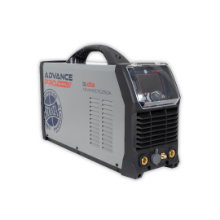
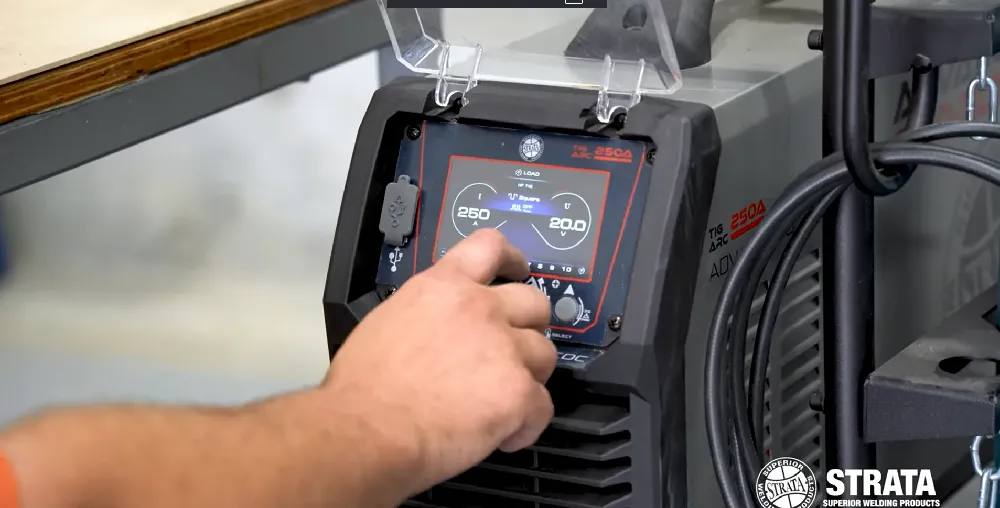
Strata AdvanceTig250ACDC: A 250A AC/DC pulse TIG and stick inverter, with a TIG range of 5 to 250A, 20 job memories, four AC waveforms and a Smart Set mode that suggests settings. It weighs 15kg, runs on 230 V, 15 A, single-phase, and ships with an 8m PRO26 torch, leads and regulator. It suits mixed-material workshops that want low-amp control and AC aluminium work, but not three-phase production or sustained full-current welding.
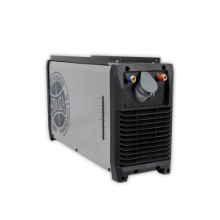
Strata AdvanceTig Compact Water Cooler: An optional 10kg cooler (10L/min, 4L coolant) that mounts to the welder, with a pressure sensor that stops welding unless coolant is circulating. It earns its place on long, hot aluminium welds, and matters less on short, low-current jobs without a water-cooled torch.
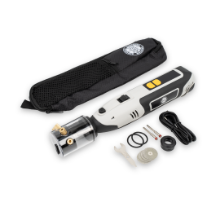
Strata STG12 12V Cordless Tungsten Grinder: A battery tungsten sharpener with five angles (10° to 25°), five sizes (1.0 to 3.2mm), six speeds and a built-in cutter. It suits TIG welders who sharpen often, either at the bench or on-site. It stops at 3.2mm tungsten and is no substitute for PPE or dust controls.
How Nexus uses them: 4 use cases
Specifications only go so far, so here is what each product does in an ordinary week at Nexus.
Use case 1: Jobbing work that changes material all day
Most workshops know the feeling: a customer needs something welded up quickly, and the machine in front of you is set for the wrong metal. At Nexus, that means a stainless job followed by heavy aluminium, both of which are wanted fast.
Alister scrolls to a stored setting, swaps the tungsten and adjusts the gas, then starts welding. He puts the changeover at about 30 seconds, whereas fetching, wheeling over and setting up a second machine took far longer. With 20 memories, the stainless-steel and heavy aluminium settings sit a scroll apart, and he says downtime has dropped significantly. Worth knowing: The 30 seconds is Alister's experience, not a Proline specification.
Use case 2: Aluminium that runs hot
Aluminium is where a TIG machine and its torch get tested, because long welds build heat quickly. Alister says that is where the cooler pays off. With the cooler fitted, he says he is “not burning out torches” on hot aluminium welds. The AC waveforms and 50 to 250Hz frequency range let him tune cleaning and penetration to the weld. The same machine works throughout the workshop and beyond: it sits on a trolley with its cooler for workshop work, loads into a vehicle for heavier site jobs, and is more portable without the cooler. He also likes the size, about the same as his old 200 with another 50 amps and many more features. Worth knowing: The trolley is sold separately, and torch life is Alister's own observation.
Use case 3: Thin and delicate material
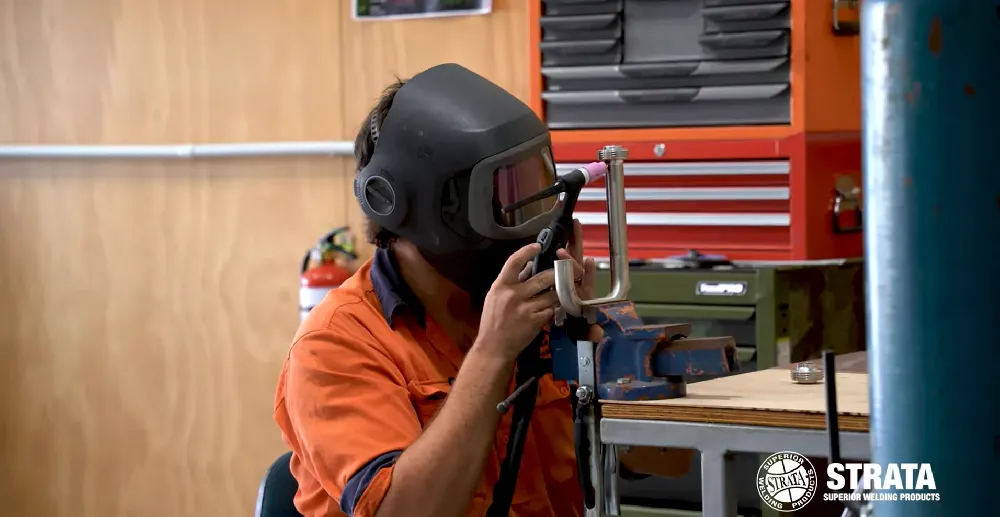
Power is only half of a TIG welder's range. The other half is how gently it can run, and that matters when the material is thin. The TIG range starts at 5A, and Alister says it holds a stable arc there, with the high-frequency start responding well, on AC as well. His previous 200A machine could not go as low, which is why last week's job, what he calls “welding razor blades”, went so well. A spot welding mode is listed for thin work. Worth knowing: 5A is a spec; results on very thin material still depend on technique and setup.
Use case 4: Sharpening tungsten at the bench
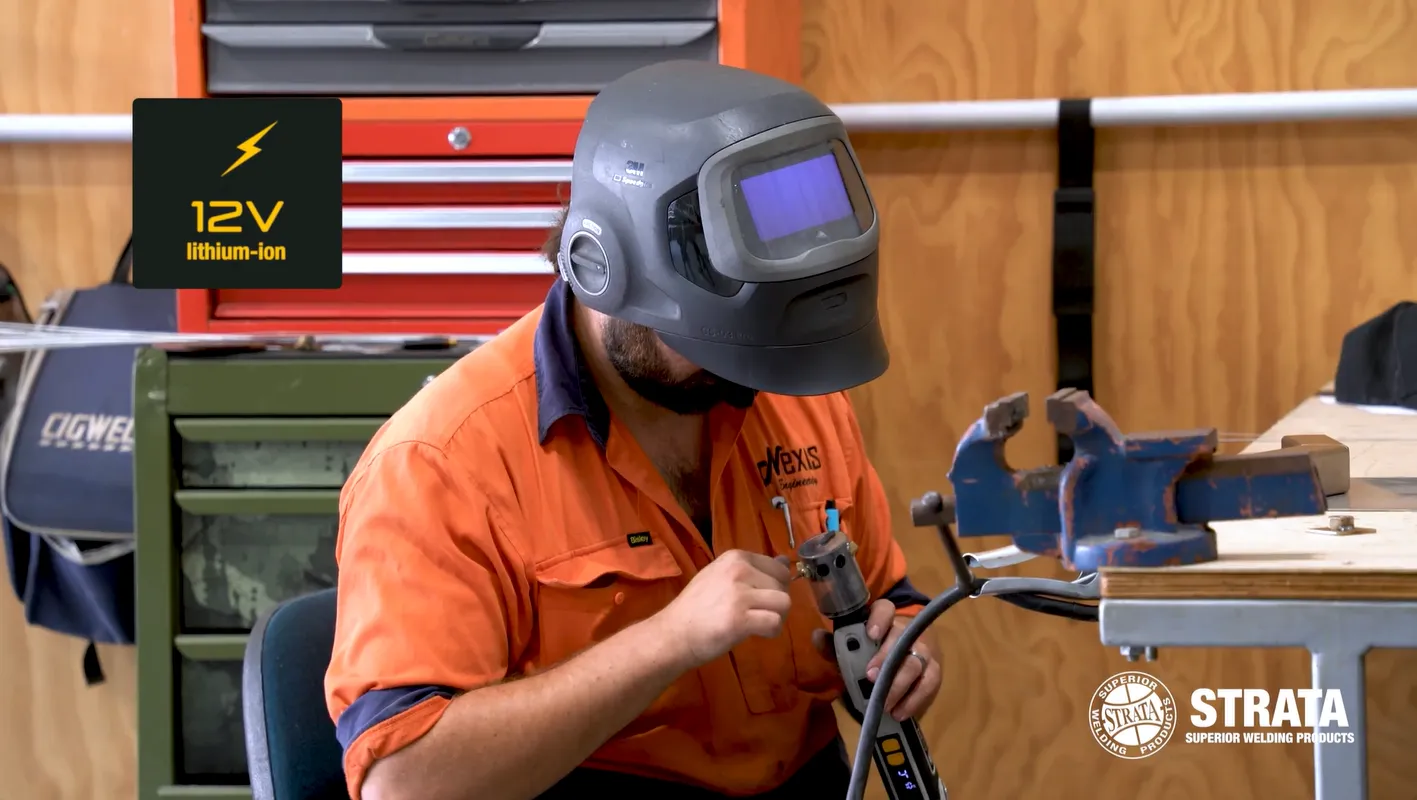
A dull tungsten stops a weld halfway, and the fix was a trip across the workshop to a grinder. The STG12 sits on the bench instead. Alister says you can “just pick this up and go for it”, and he would put one at each bench. Different angle and size slots let him seat the tungsten for any of the 25 angle and size combinations, and he says it takes a fraction of the time. He also says Nexus is buying a second welder. Worth knowing: The product page also lists a built-in cutter for contaminated tips, which Alister does not mention. He linked this use to skipping PPE. We do not recommend dropping PPE or dust controls; follow your workplace's rules and WorkSafe NZ welding guidance. The welder and cooler list a 48-month warranty; confirm terms at purchase.
Limitations: Where this welder is the wrong tool
Taken together, the picture is a workshop that has cut idle time between jobs. It is still one workshop's picture, so this setup would not suit you here.
• Three-phase supply: this machine is single-phase. Browse other TIG welders for higher-output options.
• Sustained full current: DC duty cycle is 250A at 30%, and 160A at 100%.
• Extra costs: cooler, trolley, foot pedal and consumables are separate.
• One workshop's story: these results are one customer's experience, and the product pages have no reviews yet.
• Torch compatibility: the cooler only helps with a water-cooled torch, so confirm which torch suits your setup.
• Large tungsten: the STG12 stops at 3.2mm, so bigger electrodes need another sharpener.
• DC-only work: if you only weld steel, read our AC and DC TIG explainer first.
How to decide
Match your own week to the table below. If several rows describe it, this class of machine deserves a closer look.
| If your work is mostly | Check this | What Nexus found |
| Mixed materials, changing often | Memory settings, AC and DC in one unit | About 30 seconds to change over |
| Thin sheet or fine work | Minimum amps (5A) | Stable at low heat |
| Long aluminium welds | Duty cycle, water cooler | Fewer burnt-out torches |
| Workshop and site | 15kg welder, 10kg cooler, generator size | Loads into a vehicle |
| Frequent tungsten changes | Tungsten sizes, 1.0 to 3.2mm | Quicker at the bench |
| One material, steady current | Do you need AC at all? | You may not need this |
The thread through Alister's comments is time: less walking, less setting up and fewer burnt consumables. If that sounds like your workshop, call the team on 0800 699 353, ask about Click & Collect from Nelson and Auckland, or use our spare parts finder.
Watch the Nexus Engineering videos
Hear it from the workshop: